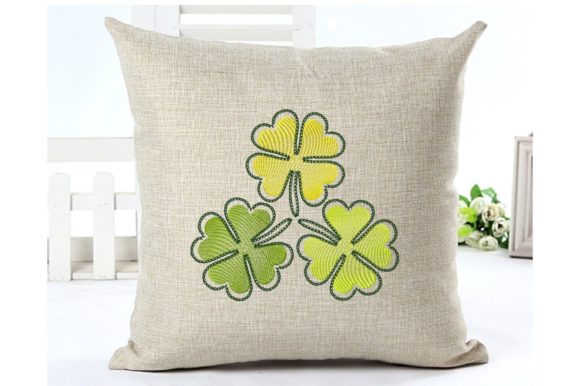
Three Leaf Clover Review for Small Business Merch
As an experienced embroidery designer who has spent years refining designs for commercial use, I often look beyond the aesthetic appeal of a pattern to its practical viability in a business setting. When evaluating the Three Leaf Clover design from the Single Flowers category, my first impression is one of versatile simplicity. The description highlights that this machine embroidery design is well suited for decorating various items like pillows, tote bags, or dining rugs. This straightforward approach suggests a design that prioritizes clarity and adaptability over intricate complexity, making it a strong candidate for small business merchandise and branded patch applications.
The First Impression: Friendly Yet Professional
In the crowded marketplace of handmade goods and custom apparel, a logo or accent design must strike a balance between being memorable and remaining legible at various scales. The Three Leaf Clover presents itself as a classic symbol with a friendly, organic personality. It feels less rigid than corporate branding and more aligned with boutique, artisanal, or lifestyle brands. For a florist, a bakery, or a creative studio, this design asset offers a touch of nature-inspired elegance without overwhelming the garment or product surface.
From a visual standpoint, the design appears to lean towards a modern yet timeless aesthetic. It avoids excessive detail that might get lost during the digitization process or on textured fabrics. This simplicity is crucial when creating embroidered patches or adding subtle details to apron embroidery. The clean lines suggest that the design will hold up well against frequent washing, a common concern for staff uniforms and customer-facing products.
Real-World Applications for Small Business Merch
Imagine a local café looking to expand their brand identity through physical goods. The Three Leaf Clover could serve as the perfect accent for a chest logo on work shirts, providing a splash of character without dominating the entire uniform. Alternatively, it could be transformed into an embroidered patch for staff caps, offering a durable and professional look that withstands daily wear.
For Etsy sellers and craft business owners, this digital embroidery file is a valuable tool for creating cohesive product lines. A boutique selling home goods could use the design on tote bag designs, turning a simple canvas bag into a branded shopping experience. Similarly, a pet brand might find success using this motif on product packaging accents or as a label sewn onto collars and leashes. The versatility extends to event merch as well; a flower shop hosting a workshop could distribute tote bags featuring this design, ensuring attendees leave with a functional item that reinforces the brand.
When used on apron embroidery, the design adds a layer of personality to the kitchen environment. Whether for a restaurant or a home-based baker, seeing a well-executed clover motif on a high-quality apron signals attention to detail. This level of craftsmanship enhances perceived product value and builds trust with customers who appreciate the care put into every aspect of the business presentation.
Strategic Brand Identity and Customer Trust
A consistent visual language is essential for building brand recognition. Using the Three Leaf Clover across different touchpoints—from digital mockups to finished products—creates a unified narrative. When customers see this design on a cap, a tote, and a dining rug, they begin to associate the symbol with the quality and ethos of the business. This visual consistency fosters a sense of professionalism and reliability.
Furthermore, the design supports a "handmade" presentation style. In an era where consumers are increasingly drawn to authentic, locally made goods, a design that feels approachable and grounded can significantly boost buyer engagement. It suggests a brand that values tradition and natural elements, which resonates well with audiences in the wellness, food, and lifestyle sectors.
Practical Considerations for Embroidery Designers
While the potential is high, successful execution requires technical precision. As a designer reviewing this for commercial projects, there are several critical steps to ensure the Three Leaf Clover performs optimally.
- Test in Black and White: Before committing to full-color thread production, run a test in black and white to verify that the stitch density and outline spacing remain clear. This ensures the design retains its integrity even if the color palette changes.
- Check Small Patch Sizes: If you plan to create embroidered patches, test the design at the intended final size. Simple embroidery works best when the stitches are not too dense, but very small sizes can sometimes cause outlines to merge. Ensure the design remains distinct when scaled down.
- Review Thread Color Contrast: The impact of the design relies heavily on the contrast between the thread colors and the fabric texture. On dark uniforms, lighter threads may need underlay adjustments to prevent the design from sinking into the material.
- Inspect Spacing and Hoop Size: Confirm the hoop size required for the design to avoid distortion. Adequate spacing between elements is vital for maintaining the shape of the clover leaves, especially on curved surfaces like cap fronts.
- Test on Real Fabric: Digital embroidery files behave differently on various materials. Always test on the actual fabric texture you intend to use, whether it is a sturdy canvas for tote bags or a softer cotton for aprons.
- Use Proper Stabilizer: To prevent puckering, especially on lightweight fabrics, select the appropriate stabilizer. This is particularly important for items that require frequent washing.
- Create a Printable Mockup: Before production, generate a printable mockup for client approval. This allows stakeholders to visualize how the Three Leaf Clover looks on the specific product before any stitching begins.
- Confirm Commercial Licensing: Ensure you have the correct commercial licensing for the digital embroidery file before using it on products for sale.
Where to Use with Caution
Even a simple design like the Three Leaf Clover has limitations. Care should be taken when applying it to items with highly textured fabrics, as the stitches may not lay flat. Additionally, while the design is versatile, extremely tiny lettering or complex outlines within the clover structure could become difficult to read on small patch sizes or tight cap fronts.
Items that undergo frequent industrial washing also require careful consideration regarding stitch density. High-density areas can lead to fabric stiffness or distortion over time. Therefore, it is advisable to review the stitch count and density specifications provided by the file creator. If these details are not explicitly included in the product description, it is prudent to contact the source or perform extensive testing before launching a large production run.
Final Thoughts on Design Assets
The Three Leaf Clover stands out as a practical and aesthetically pleasing choice for small business owners seeking to elevate their custom apparel and branded merchandise. Its ability to function effectively as a chest logo accent, sleeve detail, or standalone patch makes it a versatile addition to any design asset library. By following proper digitization protocols and understanding the nuances of fabric and thread, designers can transform this simple motif into a powerful tool for brand storytelling.
Whether you are an apparel decorator, a merch creator, or a digital embroidery file buyer, this design offers a solid foundation for creating professional-looking products. It bridges the gap between decorative art and functional branding, ensuring that your small business merch not only looks good but feels premium to the touch. With the right preparation, the Three Leaf Clover can become a signature element of your brand identity, recognized and trusted by your customers.